ENDE
Siaya County, Kenya

Impact Report2025

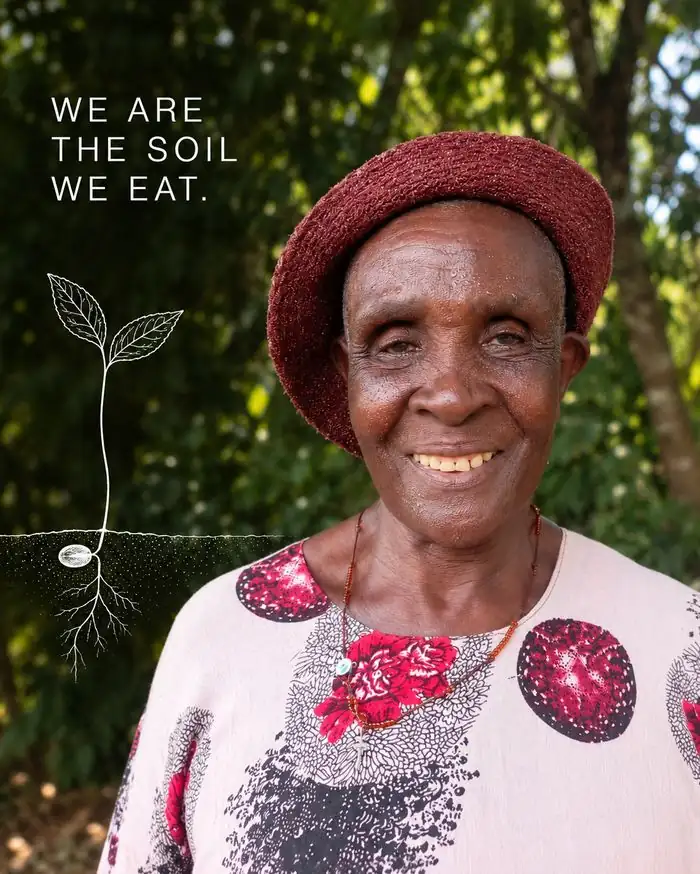
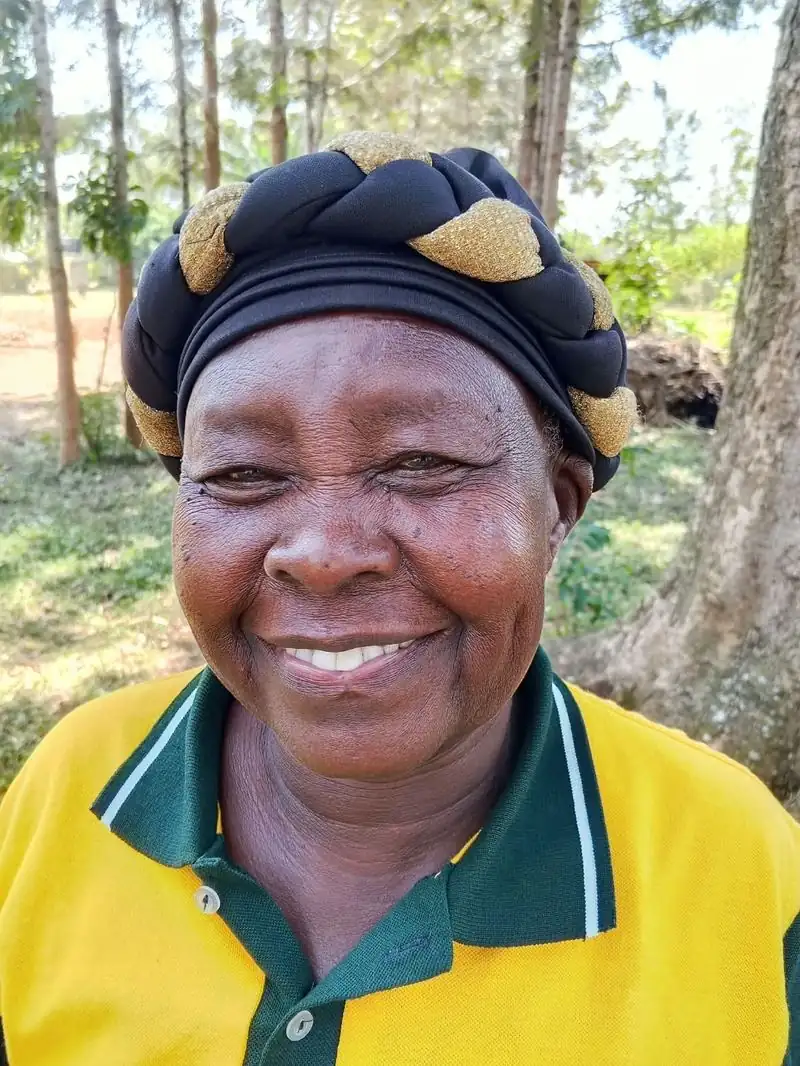
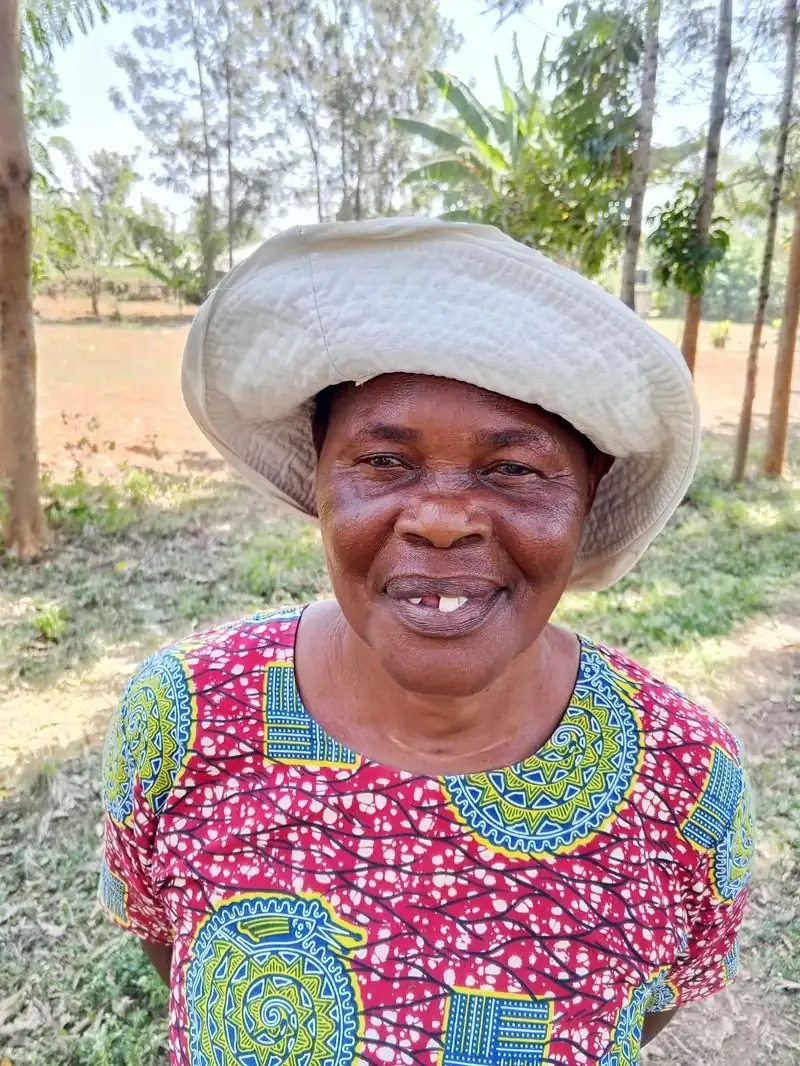
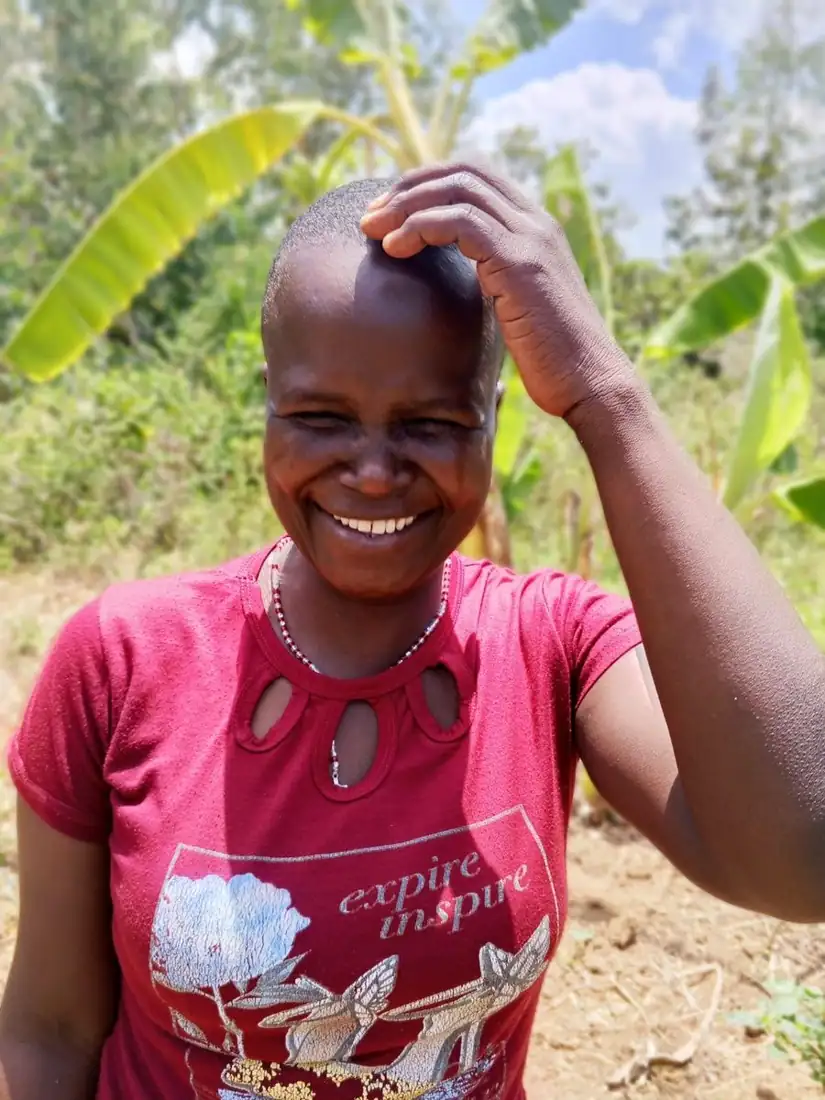
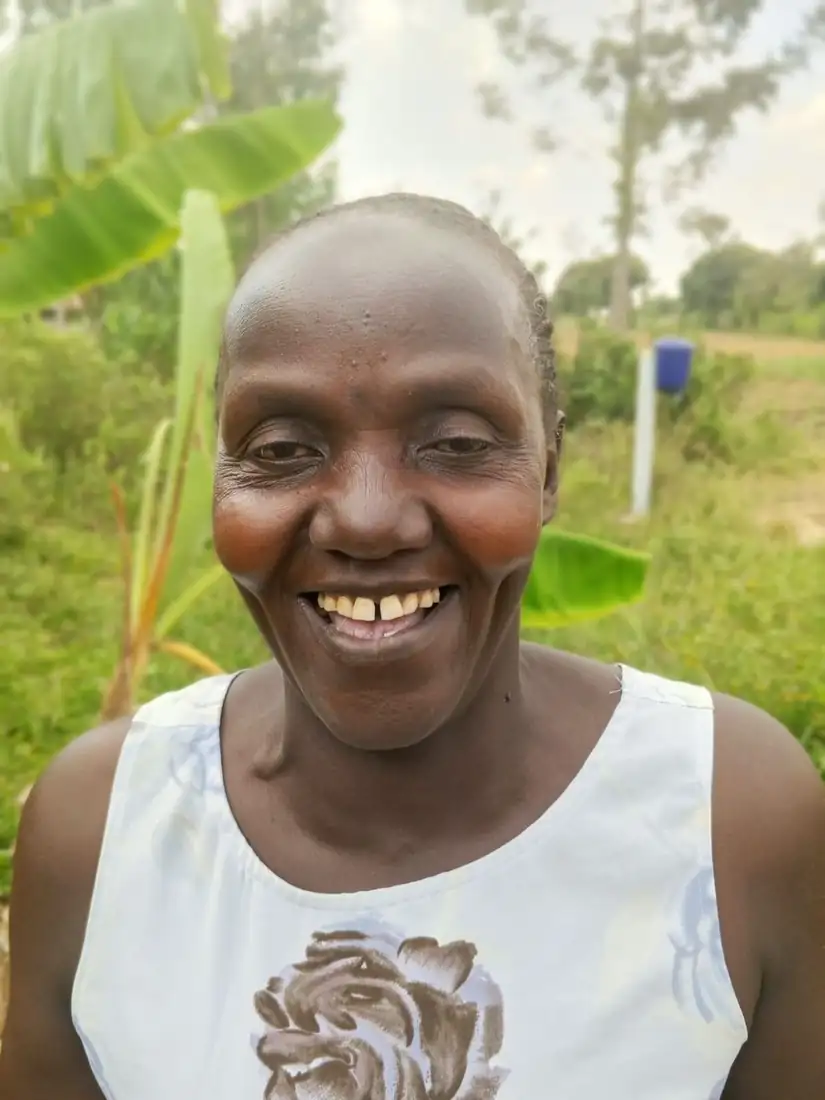
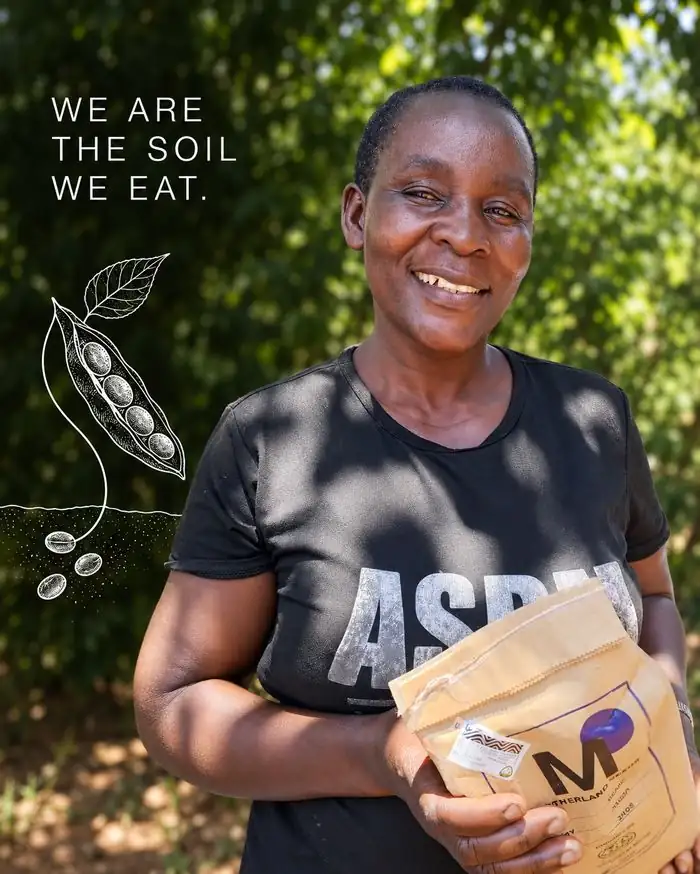
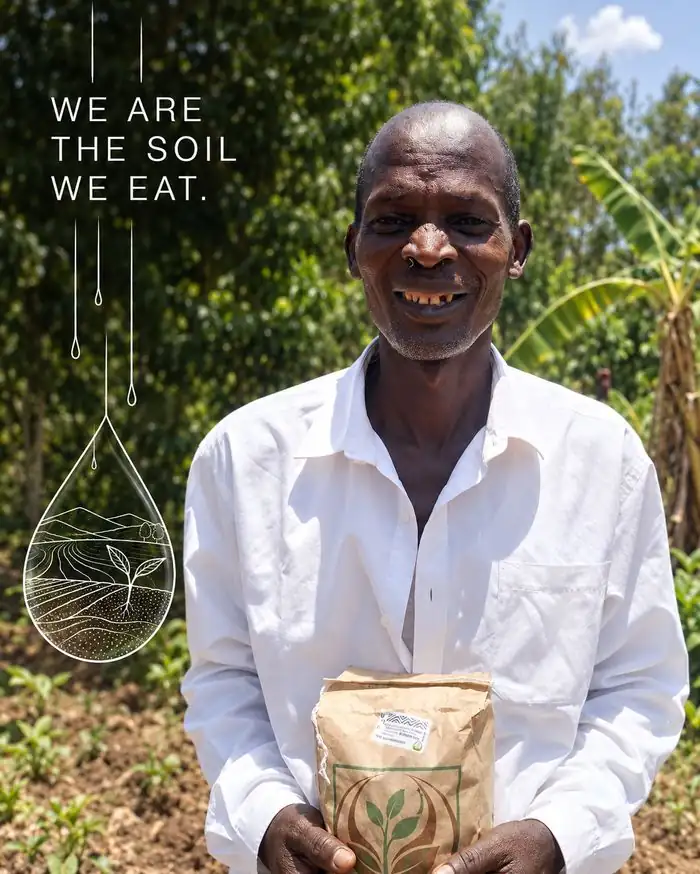
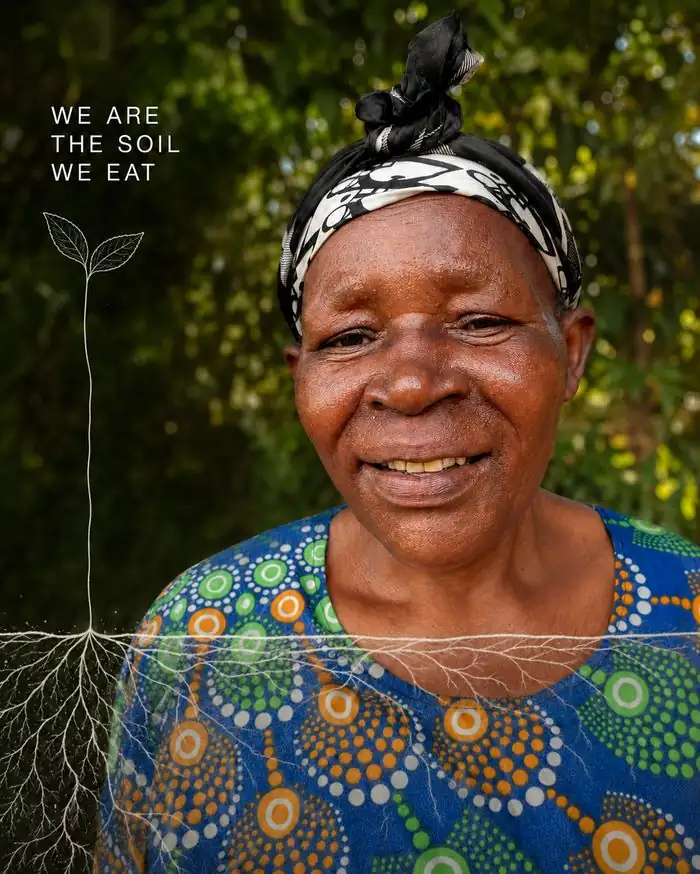
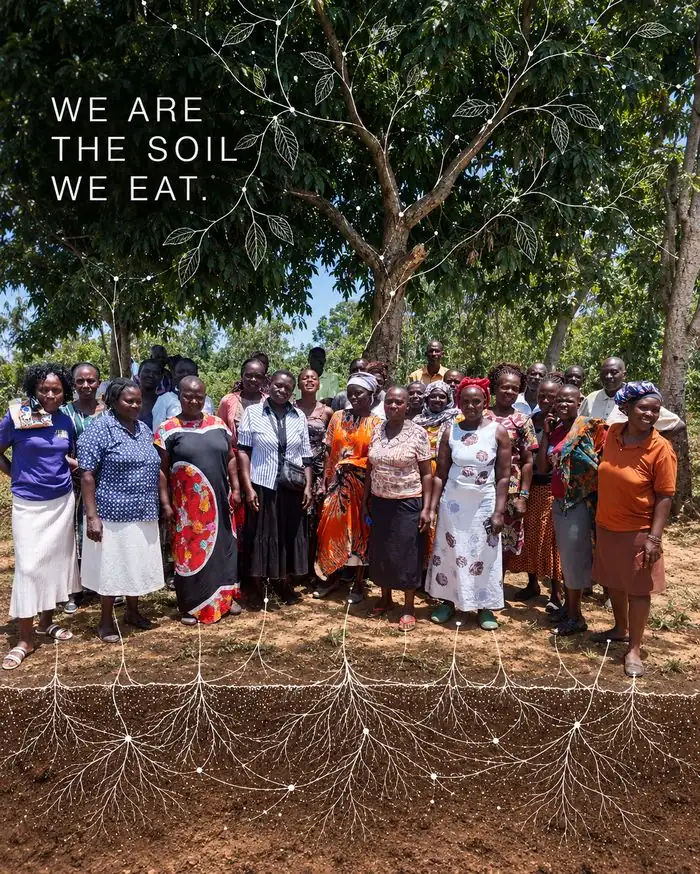
We are the soil we eat. MOTHERLAND CBO farmers in Siaya County, Kenya
Foreword

A year of strengthening the foundations for resilient farming.

2025 was a year of consolidation, learning and expansion for MOTHERLAND. The programme continued to work with smallholder bean farmers in Siaya County through an integrated model that combines farmer training, certified seed systems, regenerative agriculture, agronomic support, aggregation and market development, and began building a digital pathway for scalable agricultural advice.

The year also tested the model. Seasonal participation varied, production conditions were not the same across the long-rains and short-rains cycles, and the organisation had to manage working capital needs, seed-loan recovery, and changing market absorption. Rather than treating these variations as exceptions, MOTHERLAND is using them to strengthen how it plans, measures and learns.

Our next step is not simply to reach more farmers. It is to deepen the quality of support, strengthen market absorption, improve climate resilience, strengthen the seed system and build the data systems needed to demonstrate change over time.

We are grateful to the farmers, staff, technical partners, funders, government institutions and market actors who continue to make this work possible. The ambition for 2026 is to turn the lessons of 2025 into a stronger, more measurable and more scalable model.

Catherine Awuor
Community Lead · CEO & Co-Founder, MOTHERLAND CBO
A message from Learning from the Motherland gUG

Looking back on 2025, I feel genuinely grateful for how much we achieved together. It was a year in which we didn't just run programmes, we built real foundations, and I am especially proud of LIMA, our AI-powered agricultural advisory tool, and of the fact that we are now building our own certified seed enterprise.

But what moves me most, as 2025 turns into 2026, is something bigger than any single result. We now stand at a threshold: the chance to scale MOTHERLAND institutionally and grow as an organisation in its own right, not only in what we deliver each season, but in what we are.

I am deeply grateful to the farmers who trust us, season after season, with their land, their seed and their future. I am grateful to our extraordinary team, and to the partners who stood by us through difficult times, not only the good ones. My hope for what we build next is simple to say and hard to build: an organisation strong enough to outlast us, one that keeps serving farming communities in Siaya County long after we are gone.

Diana Beata Krüger
Co-Founder & CEO, Learning from the Motherland gUG
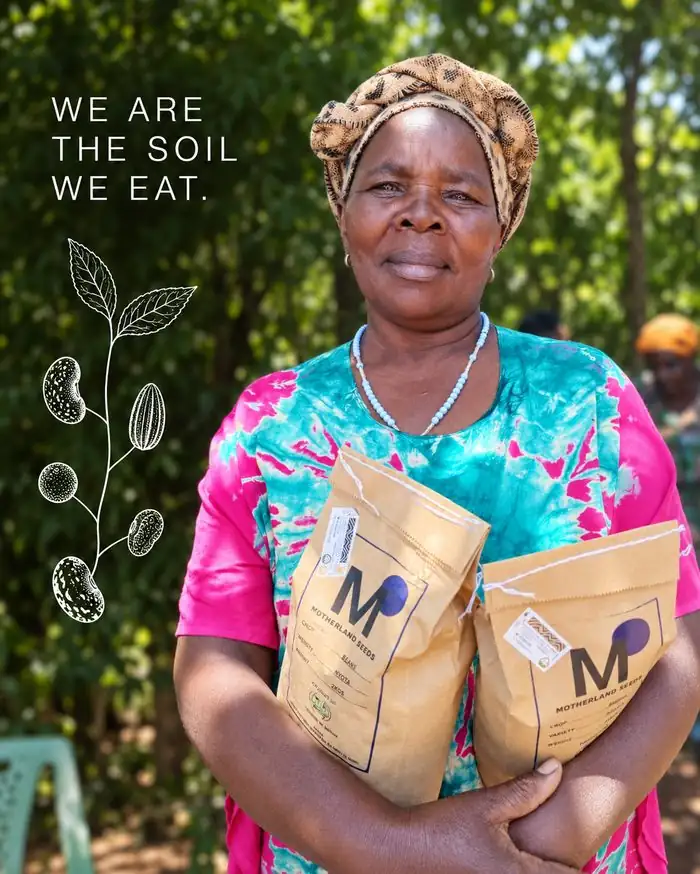
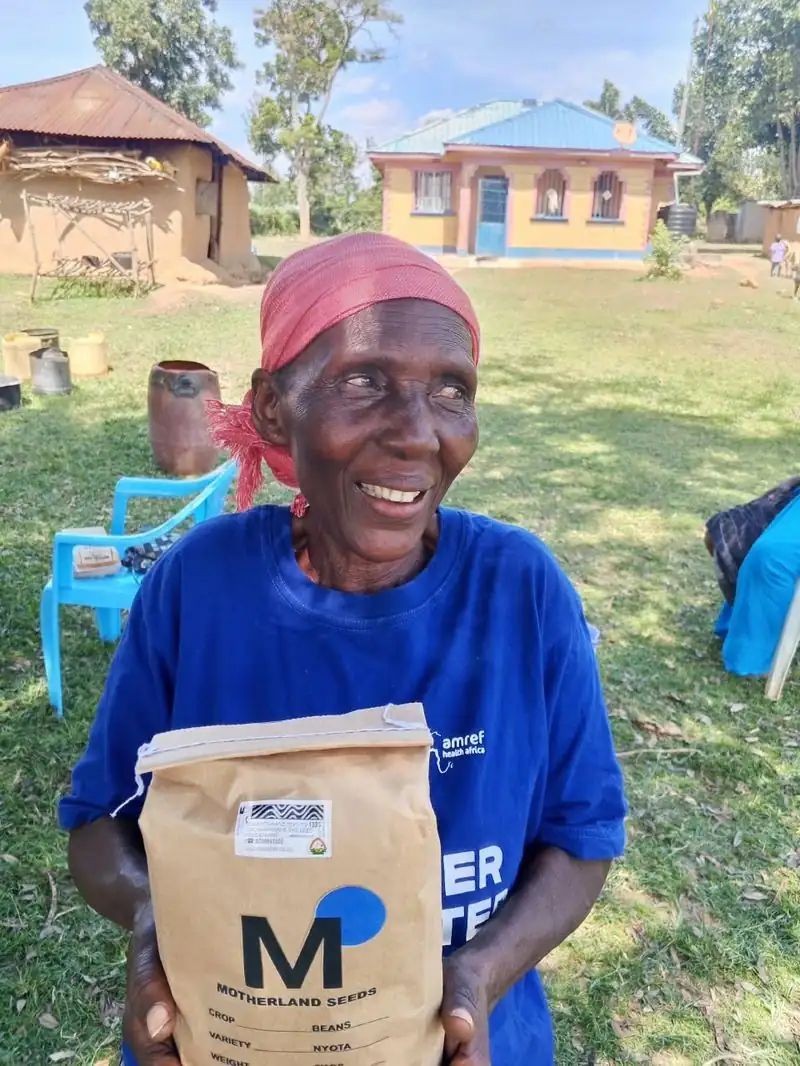
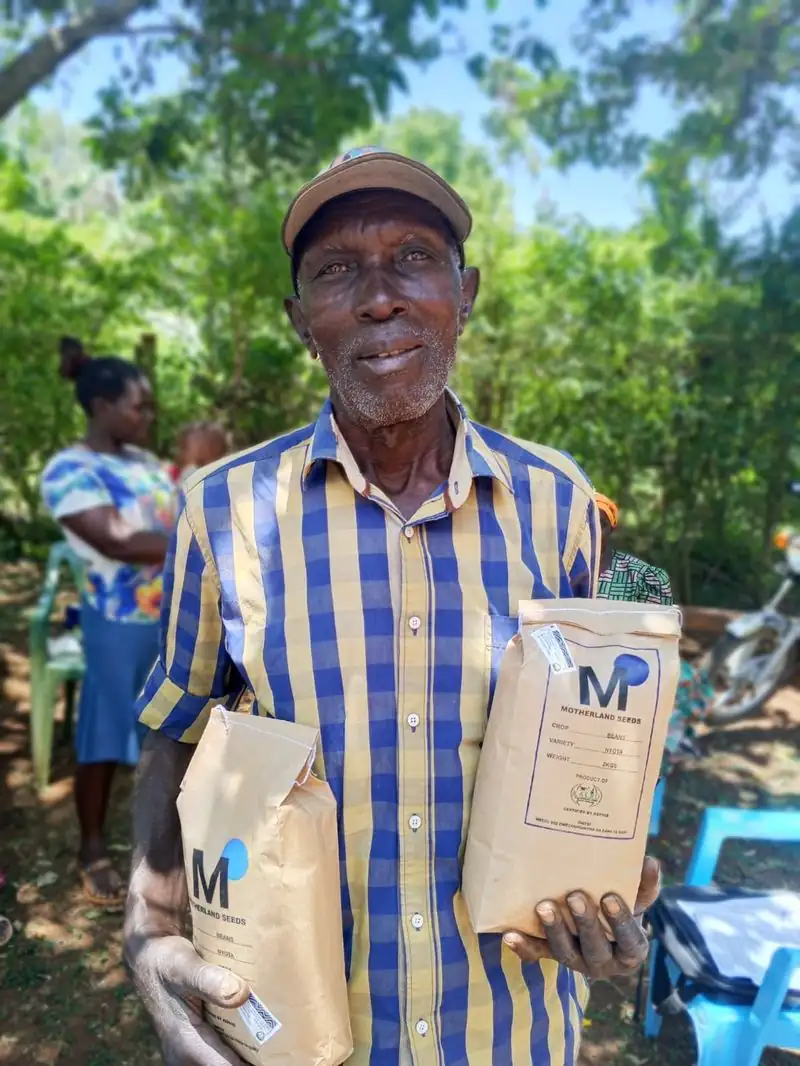
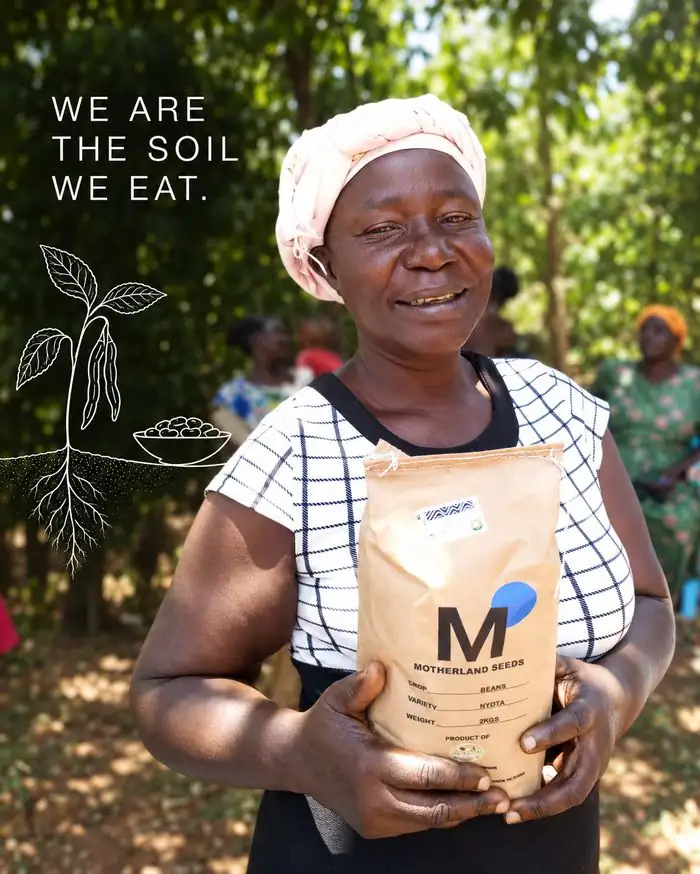
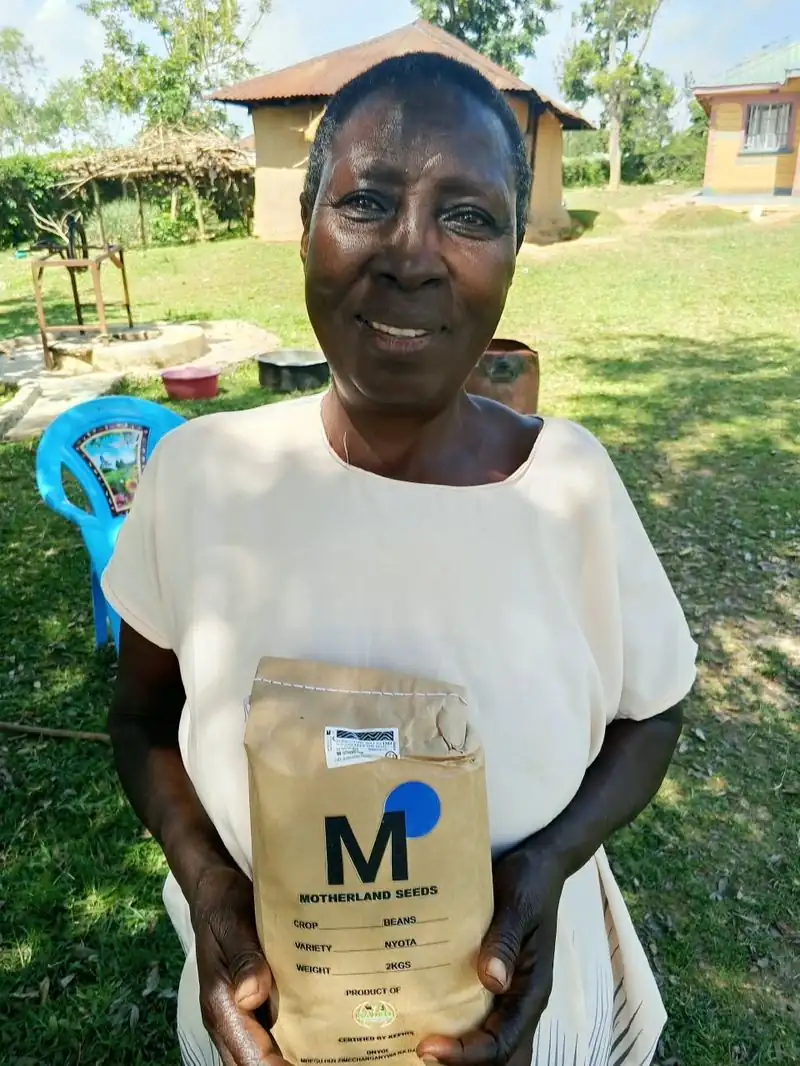
MOTHERLAND farmer with certified Nyota bean seed, Siaya County
Partnership

A partnership built around locally led change.

MOTHERLAND's 2025 work was strengthened by a partnership ecosystem connecting the Kenyan community-based organisation with technical, government, market and international funding partners. The partnership model matters because the programme's results depend on more than one organisation: certified seed production requires regulatory and technical support, farmer learning requires agronomic expertise, aggregation requires working capital and market relationships, and digital extension requires technology and design capacity.

What this partnership is designed to enable

  • Locally led farmer support and community engagement.
  • Access to quality and certified seed systems.
  • Regenerative and climate-smart agricultural knowledge.
  • Aggregation and market linkages that create opportunities for farmer sales.
  • Digital innovation through the LIMA agricultural advisory platform.
"Impact is built through partnership. Every contribution, whether financial, technical, strategic or community-led, has helped MOTHERLAND move closer to its vision of resilient and self-sufficient farming communities."

The progress achieved by MOTHERLAND in 2025 was made possible through the commitment of partners who contributed funding, technical expertise, strategic guidance and organisational support.

We extend our sincere appreciation to Chancemaker Foundation for their financial support, which enabled MOTHERLAND to implement and strengthen activities supporting smallholder farmers and the development of sustainable agricultural systems. We are grateful to Peachstone.AI for its technical contribution in constructing the LIMA digital agricultural advisory tool, and we particularly appreciate Cisco, whose funding support made the development of the AI-powered LIMA tool possible.

We also recognise Learning from the Motherland gUG for its continued leadership and partnership in management, sourcing funding opportunities, strategic guidance and connecting MOTHERLAND to broader networks. Above all, we thank the farmers and communities who continue to participate, test new approaches, share their experiences and provide the feedback that helps us learn and improve.

A verified farmer record
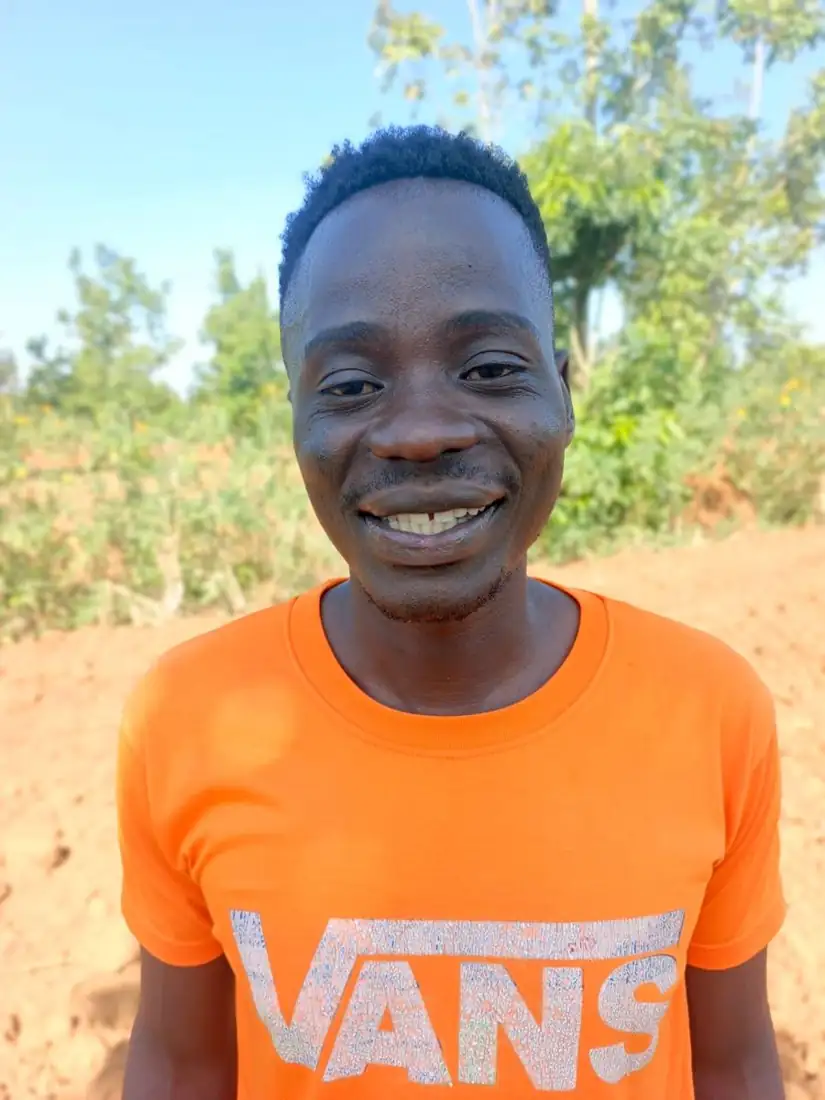
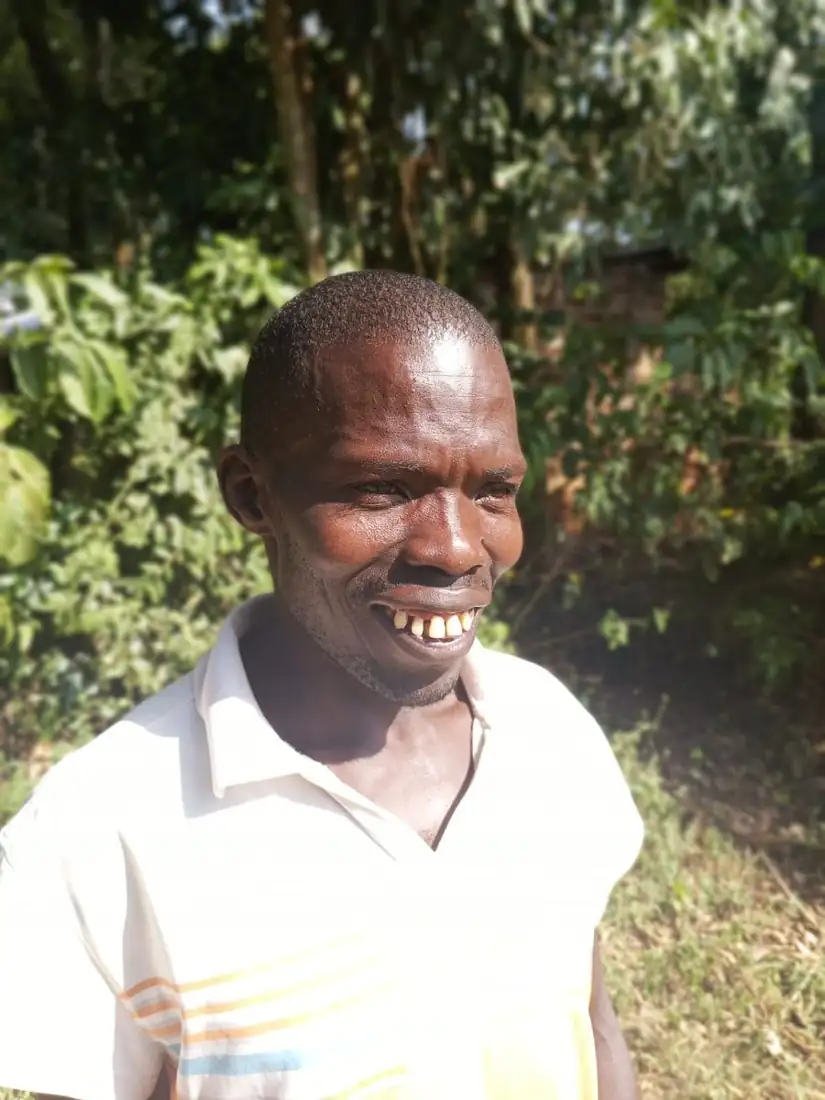
William Otieno, farmer, Siaya County, Kenya
William Otieno
43 years old · Farmer, Siaya County

Meet William Otieno, one of the farmers whose experience helps connect MOTHERLAND's programme model to the realities of production. His story is presented here as a combination of farmer testimony and verified production records in the January–June 2025 aggregation.

"I have been farming since I was young, and I was already a farmer when MOTHERLAND was first established. I believed in what the land could give me. But for a long time, what it gave me was far less than it should have been."

The core problem was not effort. It was knowledge and market access. Growing beans and maize together on 1.5 acres, William was left with around KSh 4,000 in net income after input costs and labour: beans selling at KSh 75/kg made it impossible to scale up. Since joining MOTHERLAND in 2023, certified seed, training and a dependable market at KSh 125/kg for beans changed the entire calculation. "My bean yield has grown with only 2 packets of 2kg each; I can harvest 26 to 30 kg of beans in 0.25 acre of land," he says. "I can now plan for the next season before the current one is finished."

Verified indicator2025 record
Issued seed input2 packets of 2 kg each
Long-rains area0.25 acre
Total long-rains harvest26 kg
Returned as seed8 kg
Sold12 kg
Consumed6 kg
01

Executive Summary

MOTHERLAND is a community-based agricultural organisation working in Siaya County to strengthen rural livelihoods through sustainable agriculture, certified seed systems, regenerative farming practices, digital innovation and inclusive market opportunities.

In 2025, MOTHERLAND continued to build an integrated support model for smallholder bean farmers, linking farmer learning and agronomic support with seed access, production, aggregation, market engagement and reinvestment into the next production cycle. The programme operated across five farming communities and strengthened relationships with technical, government and market partners.

The year recorded 517 farmer participations across the long-rains and short-rains production seasons, with 96 farmers participating in both. Seasonal participation is not equivalent to the number of unique farmers reached: it varied according to local climate conditions, farmer preferences, land availability, production resources, and MOTHERLAND's internal review of previous-season performance.

Production records show 8,946 kg of bean harvest across the two seasons. MOTHERLAND recovered 3,376.5 kg through the seed-loan system and purchased 4,114 kg from farmers: a seed-loan recovery rate of 72.1%. Training records captured 537 attendance instances across topics and sessions; because farmers could attend more than one topic, this is not a count of unique farmers trained.

A progressive survey reached 141 of the 209 farmers active in the long-rains season (67.5% coverage). Among surveyed farmers, 118 (83.7%) reported an increase in income, 110 (78.0%) reported improved household food access, 82 (58.2%) reported changed crop-management practices, and 84 (59.6%) reported taking climate-adaptation measures. These are self-reported findings from the surveyed sample, not programme-wide causal estimates.

The year also demonstrated the importance of financial discipline and stock recycling. A KES 300,000 working-capital facility was repaid at KES 339,000, including KES 39,000 in financing costs. MOTHERLAND also used recovered stock to generate cash for further farmer purchases and issued 1,500 kg as seed for the next production cycle.

The principal lessons from 2025 are clear: seasonal conditions matter, market absorption needs to be strengthened, seed recovery requires continued farmer support, and better longitudinal data are essential for demonstrating change over time. In 2026, MOTHERLAND will build on these lessons through stronger market development, climate resilience, seed systems, digital extension and MEAL.

02
Section 02

2025 Impact at a Glance

Headline indicators from the 2025 production year, drawn from farmer registration, production, aggregation and training records.

517
Farmer participations, across long-rains and short-rains seasons; not 517 unique farmers
96
Farmers who participated in both seasons
141/209
Progressive survey coverage: 67.5% of farmers active in the long-rains season
86
Youth participations: farmers aged 18–35
537
Training attendances: aggregate across topics/sessions, not unique trainees
8,946kg
Bean harvest: combined long-rains and short-rains
3,376.5kg
Recovered through the seed-loan system
4,114kg
Beans purchased from farmers
72.1%
Seed-loan recovery rate: verified programme indicator
30
Soil Health Ambassadors trained on soil-health management and testing
1,390.5kg
Certified Nyota seed produced, programme-reported
5
Farming communities across Siaya County

Vision

Resilient and self-sufficient farming communities where every smallholder household has access to quality seed, sustainable markets, climate-smart knowledge and dignified livelihoods.

Mission

To strengthen rural livelihoods by working with smallholder farmers through sustainable agriculture, certified seed systems, regenerative farming practices, digital innovation and inclusive market opportunities.

Core Values

  • Integrity: transparency, accountability, responsible stewardship.
  • Innovation: technology and evidence-based solutions.
  • Community Ownership: locally led, sustainable solutions.
  • Inclusion: equitable access for women, youth and vulnerable farmers.
  • Sustainability: environmentally responsible agriculture.
03
Section 03

The Agricultural Challenge

Why the work matters in Siaya County

Agriculture remains central to rural livelihoods in Siaya County, yet smallholder farmers operate within a set of interconnected constraints: limited access to certified seed, declining soil fertility, erratic rainfall and drought, pest and disease pressure, limited agricultural extension, post-harvest losses, weak bargaining power and price volatility.

ChallengeWhy it matters to farmersMOTHERLAND response
Quality seed accessPoor planting material can constrain productionCertified seed systems and revolving seed-loan model
Climate variabilitySeasonal conditions affect planting, participation and yieldClimate-adaptation learning and regenerative practices
Soil healthDeclining soil fertility can reduce production potentialSoil-health training, ambassadors and regenerative agriculture
Extension accessFarmers need timely technical informationTraining, agronomic support and LIMA digital advisory
Market accessProduction does not automatically translate into salesAggregation and buyer development
Working capitalPurchasing harvest requires liquidityWorking-capital financing and stock recycling
Post-harvest / enterpriseStock needs to be managed and moved efficientlyAggregation, stock management and market linkages

Not only production

A farmer may have land but lack quality seed; may harvest successfully but face weak market absorption; or may receive technical advice without sufficient resources to implement it. Climate variability can also change the relative attractiveness of production seasons.

What the 2025 evidence adds

Seasonal participation varied across the long-rains and short-rains cycles. Production was materially different between seasons, making seasonal analysis more informative than a single annual average. Seed recovery and market absorption need continuous management rather than automatic outcomes.

MOTHERLAND's response

MOTHERLAND works across the value chain rather than treating seed, agronomy, markets and finance as separate issues: helping farmers access quality inputs and knowledge, produce more effectively, participate in aggregation and markets, and contribute to a revolving seed system.

04
Section 04

The MOTHERLAND Model

From quality seed to stronger rural livelihoods. MOTHERLAND's approach is built around a connected agricultural value chain: the objective is not simply to deliver inputs or training, but to create a system in which farmers can access knowledge and quality seed, produce, aggregate, sell and reinvest.

01

Quality seed

Certified seed multiplication and seed-loan access → improved access to quality planting material.

02

Farmer learning

Good Agricultural Practices, regenerative agriculture, soil health → stronger farmer knowledge and decision-making.

03

Agronomic support

Farm monitoring, advisory and production guidance → better management of production risks.

04

Climate and soil resilience

Soil health promotion and climate-smart practices → greater capacity to manage production constraints.

05

Production

Seasonal bean production supported through farmer participation → harvests for food, seed and market use.

06

Aggregation

Purchase and recovery of beans from participating farmers → more organised farmer-market connection.

07

Markets

Offtaker and market relationships → improved opportunities to sell produce.

08

Reinvestment

Seed recovery and re-issue into subsequent cycles → a revolving system supporting future production.

09

Digital extension

Development of LIMA AI-powered agricultural advisory → potential to scale access to agricultural knowledge.

The model is designed to be locally rooted while becoming increasingly scalable. Each link depends on the others: production affects aggregation, aggregation affects cash flow, market absorption affects purchasing capacity, and seed recovery affects the ability to support the next cycle.

What the model does not assume

  • Training automatically produces higher yields.
  • Participation automatically produces income growth.
  • All harvested beans are sold through MOTHERLAND.
  • A single season proves long-term resilience.
05
Section 05

Theory of Change

How activities are intended to contribute to outcomes. MOTHERLAND's theory of change links the constraints faced by smallholder farmers with a sequence of inputs, activities, outputs and outcomes: distinguishing clearly between what MOTHERLAND delivered and what farmers reported or demonstrated as a result.

LevelMOTHERLAND pathway2025 evidence / indicator
ProblemLimited quality seed, climate variability, soil constraints, limited extension, market and finance constraintsBaseline / programme evidence describes these constraints
InputsSeed, technical expertise, partnerships, working capital, farmer data and digital developmentCertified seed initiative; partner network; working-capital facility; LIMA development
ActivitiesTraining, agronomic support, seed multiplication, aggregation, market engagement, soil-health work and digital advisory development537 training attendance instances; 30 Soil Health Ambassadors formed by RHEA; seed and aggregation records
OutputsFarmers participate; seed is produced / recovered; beans are harvested and aggregated; knowledge is delivered517 seasonal participations; 8,946 kg harvest; 3,376.5 kg seed recovered; 4,114 kg purchased
Short-term outcomesFarmers report changes in knowledge, practices, income and food accessAmong 141 surveyed: 118 reported income increase; 110 reported improved food access; 82 reported changed crop management
Medium-term outcomesMore resilient and commercially viable farming and seed systemsEvidence is emerging; longitudinal farmer-level measurement is still being strengthened
Long-term impactMore resilient livelihoods and self-sufficient farming communitiesAn intended contribution, not a claim that 2025 alone proves attribution
Measurement principle. For every outcome statement in this report, MOTHERLAND specifies what changed, for whom, by how much, during which period, and from which source the evidence comes. Where evidence is sampled or self-reported, the report says so.
06
Section 06

Farmer Reach & Inclusion

517 farmer participations across two production seasons. MOTHERLAND's 2025 farmer engagement was organised around two production cycles: the January–June long-rains season and the September–December short-rains season: 209 participations during the long rains and 308 during the short rains.

MOTHERLAND farmer with certified seed, Siaya County
How to read this section. The 517 figure is a measure of seasonal participation, not unique annual reach. The 96 farmers who participated in both seasons are counted in both seasonal cohorts: this prevents the report from overstating the number of individual farmers reached.
209
Long-rains participation: January–June cycle
308
Short-rains participation: September–December cycle
96
Farmers who participated in both seasons
Geographic reach: participation by community
Long-rains vs. short-rains seasonal participation, 5 communities in Siaya County
Pap Gori
35
37
Malanga
67
38
Boro
25
12
Yala
82
77
North Alego
0
144
Long rains (Jan–Jun)Short rains (Sep–Dec)
MOTHERLAND expanded its programme to North Alego in 2025 in response to demand from local farmers and community leaders. Totals: Pap Gori 72 · Malanga 105 · Boro 37 · Yala 159 · North Alego 144 · combined 517.
Participation by gender
405 female · 112 male participation records across two seasons
Female · 405 (78.3%)Male · 112 (21.7%)
Youth participation (18–35)
86 youth participation records: 62 female, 24 male
Female youth · 62Male youth · 24

Why participation changed between seasons

Participation in smallholder production is influenced by community-level local climate and weather conditions, farmer preferences regarding production seasons, availability of land, production resources, and MOTHERLAND's internal review of farmer performance in the previous season. This internal review considers how well farmers managed MOTHERLAND's production requirements: a programme-management mechanism, not an impact outcome.

Building local agricultural leadership

Recognising that community ownership is fundamental to sustainability, MOTHERLAND continued strengthening a decentralised farmer leadership structure: farmers are subdivided into clusters of ten, each with a lead, and every village has a lead farmer: making it easier for agronomists to reach households through the cluster lead. By strengthening local leadership capacity, MOTHERLAND created an agricultural support system that continues functioning beyond individual project activities.

CommunityLong rains (female)Short rains (female)Leadership roleTotal female
Pap Gori31294 leads and 1 as supervisor60
Malanga48264 leads and 2 as soil health ambassadors74
Boro21113 as leads32
Yala69633 as leads and 1 as soil health ambassador132
North Alego01076 as leads, 3 as soil health ambassadors107
Total16923620 leads & 6 soil health ambassadors405

4 of 6 lead farmers were women in Pap Gori village, 4 of 7 in Malanga, 3 of 3 in Boro, 3 of 8 in Yala, and 6 of 14 in North Alego ward: indicating that women are actively participating in leadership roles.

07
Section 07

Farmer Learning & Training

From attendance to application. Training was organised around several topics, including Conservation Agriculture, farmer sensitisation on bean production, farm management for bean production, and RHEA soil-health conservation training.

Training attendance by gender
537 total attendance instances across sessions and topics
Female · 406Male · 131
Attendance instances, not unique trainees: a farmer attending three sessions is counted three times.
Training Knowledge Practice Farm performance Farmer outcome

The training programme sought to improve bean-production knowledge, strengthen practical crop-management decisions, support regenerative agriculture and soil-health practices, improve responses to climate and production risks, and connect learning with the wider seed, production and market model.

Connecting training to outcomes

Training attendance is an output. The outcome question is whether farmers applied what they learned. The progressive survey found that 82 of the 141 surveyed farmers (58.2%) reported changing crop-management practices: self-reported evidence, presented separately from attendance.

Delivery evidenceOutcome evidenceWhat to monitor next
537 attendance instances82/141 reported practice changeObserved adoption and sustained practice
Training on GAP84/141 reported adaptationSpecific adaptation practices
Soil-health training63/141 reported soil conservationPractice adoption and soil indicators
Soil health

137 farmers requested more soil-health training, recognising soil depletion as a major barrier to yield. MOTHERLAND formed a partnership with RHEA in November 2025 to support farmers on soil-health challenges: fully operational in 2026.

Post-harvest & market access

Farmers requested help handling crops after harvest (98 requests) and navigating market systems (80 requests): leading to a partnership with the Cereal Growers Association (CGA) and an MoU with a private aggregator to purchase farmers' harvests.

08
Section 08

Seed Systems & Climate Resilience

Building a seed system that can serve the next season. MOTHERLAND's seed model combines access to quality bean seed, farmer training, production support, and a revolving seed-loan mechanism, so that seed provided to farmers supports production, part of the harvest is recovered, and recovered seed can support subsequent production.

MOTHERLAND farmer with certified Nyota bean seed, Siaya County
Seed issued Farmer production Harvest Seed return Seed re-issued Next cycle
87.7%
Long-rains recovery rate: 1,537 of 1,752 kg expected
62.8%
Short-rains recovery rate: 1,839.5 of 2,930 kg expected
72.1%
Overall 2025 recovery rate: 3,376.5 of 4,682 kg expected

Recovery was substantially stronger during the long rains than during the short rains. The annual 72.1% figure hides an important seasonal difference: continued farmer follow-up, production planning and clear communication of seed-loan requirements remain important.

Seed-loan performance over two years
Actual kg returned (bar) against expected recovery (marker), by season
Jan–Jun 2024
1,115 kg
Sep–Dec 2024
2,203 kg
Jan–Jun 2025
1,537 kg
Sep–Dec 2025
1,839.5 kg
Actual returnedExpected recovery
Jan–Jun 2025 was the strongest season relative to target (12.3% below expected). Sep–Dec 2025 was 37.2% below expected, greatly affected by changes in weather conditions during the short rains. MOTHERLAND continues to strengthen farmer engagement and seed-loan recovery through improved extension support, community accountability mechanisms and farmer education.

Certified Nyota seed multiplication

MOTHERLAND invested approximately KES 252,500 in establishing the certified seed multiplication enterprise, reporting 1,390.5 kg of certified Nyota seed harvested from three acres under KEPHIS supervision: an important step toward strengthening local access to quality seed.

Investment categoryAmount (KES)
Land leasing (3 acres)15,000
Land preparation (ploughing 2x)27,000
Seeds and inputs66,000
KEPHIS certification & supervision27,000
Labor (planting, weeding, harvesting)36,000
Post-harvest handling & packaging36,500
Transport & logistics21,000
Contingency (10%)24,000
Total investment252,500

Indicative commercial value

Rainfall distribution across Siaya County became increasingly unpredictable, with prolonged dry spells during flowering, pod formation and grain filling. Despite acceptable compliance with recommended agronomic practices, production came in below the 1,920 kg expected from 3 acres: 1,390.5 kg was harvested and met KEPHIS certification standards.

Projected sales value (300 KES/kg)KES 417,150 · €2,793.65
Total investment / costKES 252,500 · €1,690.99
Indicative gross surplusKES 164,650 · €1,102.66
Indicative margin39.46%

These figures represent estimated commercial value at the stated distributor price and should not be interpreted as realised 2025 revenue or profit. The seed remains stored. Conversion to euros per the rate provided 13 August 2026.

Climate resilience

Climate resilience is best presented as a combination of knowledge, production choices and adaptive practices, rather than viewing the reduced short-rains harvest solely as a production loss. MOTHERLAND considers the season an important learning opportunity that reinforced the need to strengthen climate adaptation strategies across the production system.

  • Diversifying planting windows to reduce climatic risk.
  • Promoting drought-resilient farming practices.
  • Increasing soil moisture conservation.
  • Strengthening seasonal weather forecasting.
  • Expanding regenerative agriculture techniques.
  • Improving farmer preparedness before planting seasons.

2025 learning

  • Seed recovery was stronger during the long rains than during the short rains.
  • Seasonal production conditions affect farmers' ability to meet seed-loan expectations.
  • Seed recovery requires ongoing follow-up and production planning.
  • Future monitoring should record specific adaptation practices rather than using "resilience" as a broad claim.
09
Section 09

Production & Productivity

Two seasons, two production realities. The 2025 aggregation records demonstrate why production should be analysed by season rather than represented through one annual average: the long-rains season generated 5,349 kg from 67.25 acres, while the short-rains season generated 3,597 kg from 94.125 acres.

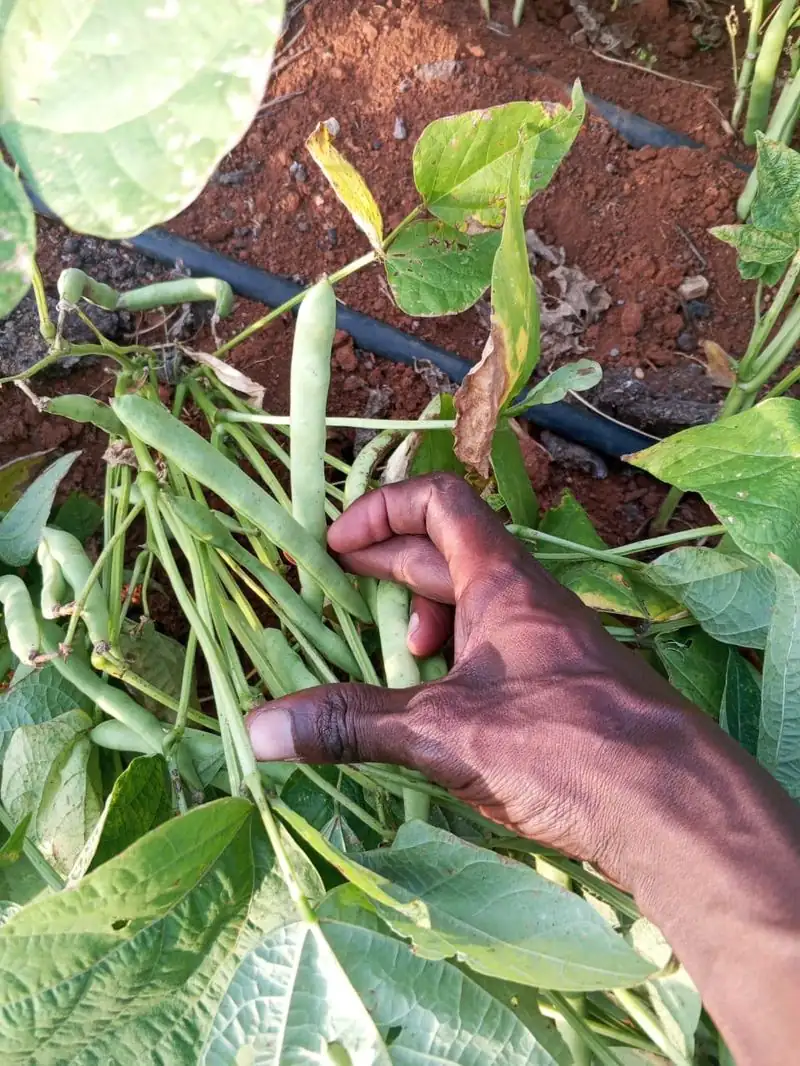
Hand harvesting Nyota beans, MOTHERLAND field, Siaya County
Beans ready for harvest, one of the five MOTHERLAND CBO communities, 2025.
Production measureLong rainsShort rainsCombined
Area cultivated67.25 acres94.125 acres161.375 acres
Total harvest5,349 kg3,597 kg8,946 kg
Yield79.5 kg/acre38.2 kg/acre55.4 kg/acre*
Share of total harvest59.8%40.2%100%

* Combined yield = 8,946 kg ÷ 161.375 acres: a portfolio-level indicator, not a farmer-level average. The decline in short-rains yield is mainly attributed to the dramatic change in local climate; seasonal difference should be treated as evidence for programme learning and adaptive planning.

Production overview, last two years

SeasonFarmersAcreageSeed issued (kg)Seed-loan expected (kg)Seed returned (kg)Purchased (kg)Consumed (kg)Total harvest (kg)
Jan–Jun 2024185199561,9121,1152,2948004,209
Sep–Dec 2024246761,5793,1582,2033,7908806,873
Jan–Jun 202520967.258761,7521,5372,8299835,349
Sep–Dec 202530894.1251,4652,9301,839.501,285472.53,597

Acreage under cultivation grew almost fivefold, from 19 acres in Jan–Jun 2024 to 94.125 acres in Sep–Dec 2025. Yield per acre fell over the same period, from 221 kg/acre in the first 2024 season to 38.2 kg/acre in the 2025 short rains, and the 2025 harvest was 19% below 2024. Part of this is weather: the 2025 short rains brought prolonged dry spells. Part of it is growth: many new farmers and new plots entered the programme at once. For 2026, MOTHERLAND is therefore prioritising yield per acre, soil health and farmer follow-up over further expansion of acreage.

10
Section 10

Market Access & Aggregation

Aggregation provides the bridge between farmer production and market opportunity. In 2025, MOTHERLAND purchased 4,114 kg from farmers, representing an average of 46.0% of the recorded 8,946 kg harvest.

MOTHERLAND farmer, Siaya County
Share of harvest purchased, by season
Percentage of total seasonal harvest purchased by MOTHERLAND
Jan–Jun 2024
54.50%
Sep–Dec 2024
55.14%
Jan–Jun 2025
52.89%
Sep–Dec 2025
35.72%
Throughout the first three seasons (Jan–Jun 2024 through Jan–Jun 2025), the organisation maintained a steady purchasing rate of 52.89–55.14%. The Sep–Dec 2025 dip to 35.72% was greatly affected by low production in the short rains: a programme learning point, since market absorption depends on production volumes, timing, working capital and the organisation's ability to purchase and move stock.
Market measureLong rainsShort rainsCombined
Harvest5,349 kg3,597 kg8,946 kg
Quantity purchased2,829 kg1,285 kg4,114 kg
Share purchased52.9%35.7%46.0%
Recovered through the seed-loan system1,537 kg1,839.5 kg3,376.5 kg
Economic security

The purchasing model provides farmers with a structured market opportunity and may contribute to improved income. In the progressive survey, 118 of 141 farmers surveyed (83.7%) reported an income increase: self-reported evidence of a positive outcome among surveyed farmers, not a programme-wide causal estimate.

The revolving stock model

The stock-management records show how recovered beans could support further farmer purchasing. During the short-rains cycle, 1,236 kg of recovered beans was sold to an offtaker for KES 160,680, with proceeds used to purchase further beans from farmers: demonstrating the practical link between seed recovery, stock management, cash generation and aggregation, not profit.

TransactionQuantity / valueMeaning
Recovered beans sold to offtaker1,236 kgPart of seed-loan recovery; not additional harvest
Cash generatedKES 160,6801,236 kg × KES 130/kg
Short-rains farmer purchases1,285 kgRecorded purchase figure

2025 market learning

11
Section 11

What Changed for Surveyed Farmers

Evidence from the progressive farmer survey, the clearest 2025 outcome evidence. It covered 141 farmers selected from the 209 farmers active during the long-rains season, representing 67.5% coverage of that seasonal farmer population.

MOTHERLAND farmer, Siaya County
Self-reported outcomes among 141 surveyed farmers
Source: Progressive Survey 2025
Income increase
118/141
Improved food access
110/141
Climate adaptation
84/141
Crop-management change
82/141
Soil conservation
63/141
These results provide important evidence of farmer-reported outcomes, but are not used as programme-wide impact estimates. The 141 respondents are a sample of the 209 farmers active during the long-rains season, not all 517 seasonal participants. The survey captures reported change rather than independently audited household income.

Triangulation opportunity

Survey signalRelated administrative evidence2026 measurement opportunity
Income increaseHarvest, aggregation, sales recordsLink farmer-level survey responses to transactions
Practice changeTraining + farm recordsConduct follow-up adoption checks, record on EProd
Climate adaptationTraining + production recordsRecord specific adaptation practices through more surveys
Soil conservationSoil-health programme recordsTrack adoption through survey, later measured over time with the RHEA soil measurement gadget
Farmer stories & voices

The human meaning behind the programme statistics.

Farmer voices captured in videos were transcribed and verified against administrative records, so the report can distinguish what farmers say from what the data demonstrates.

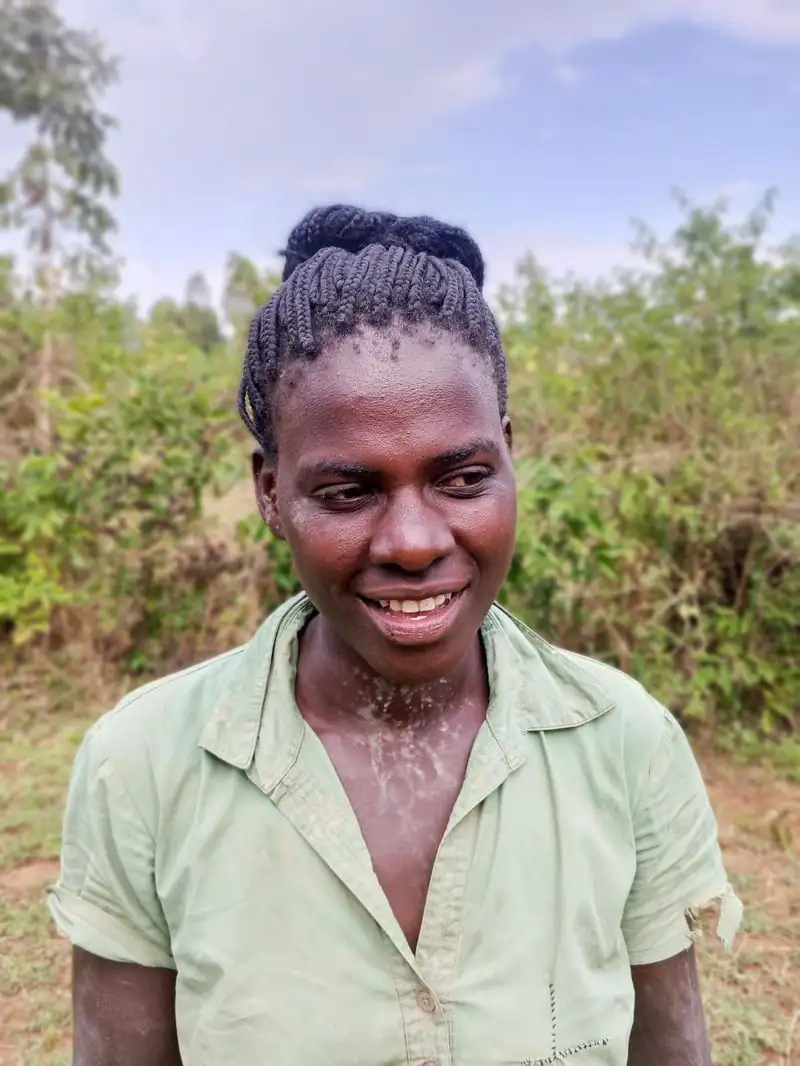
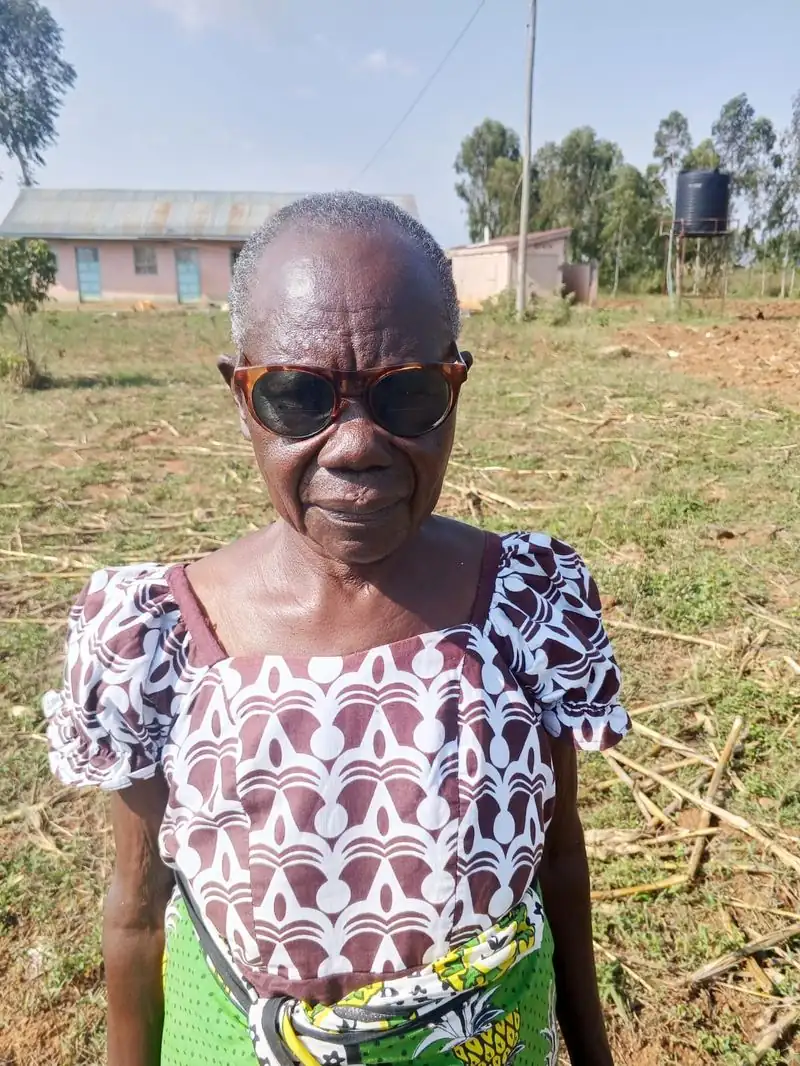
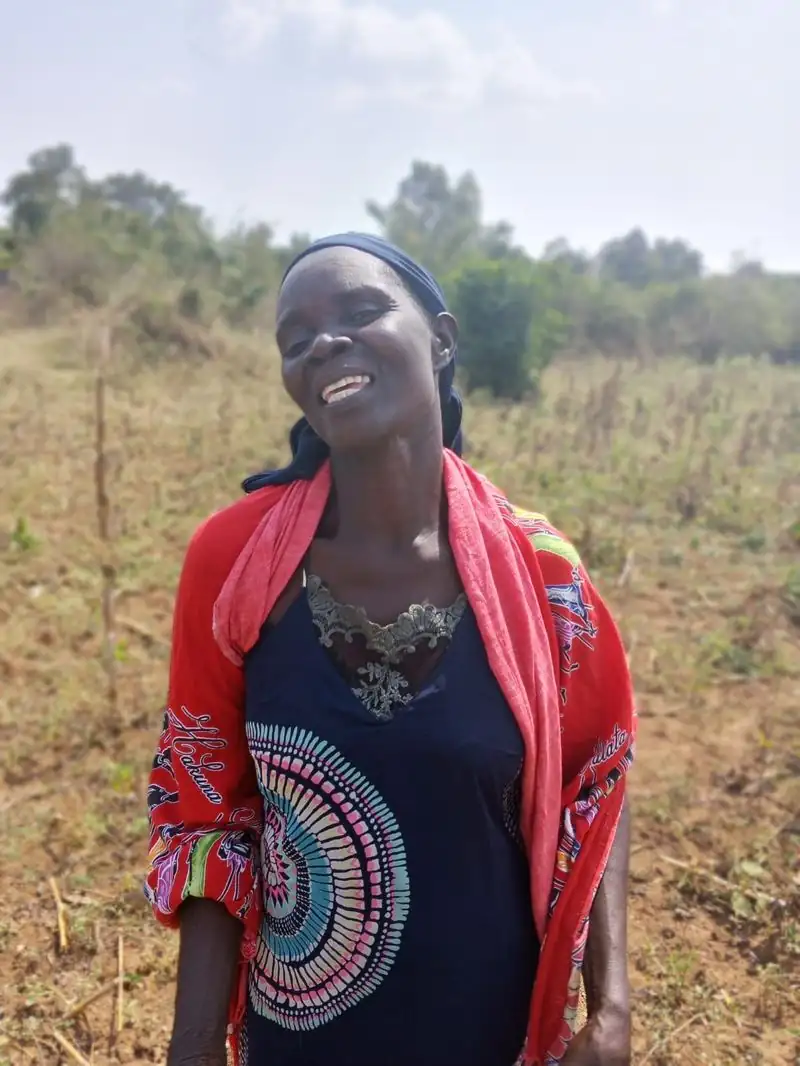
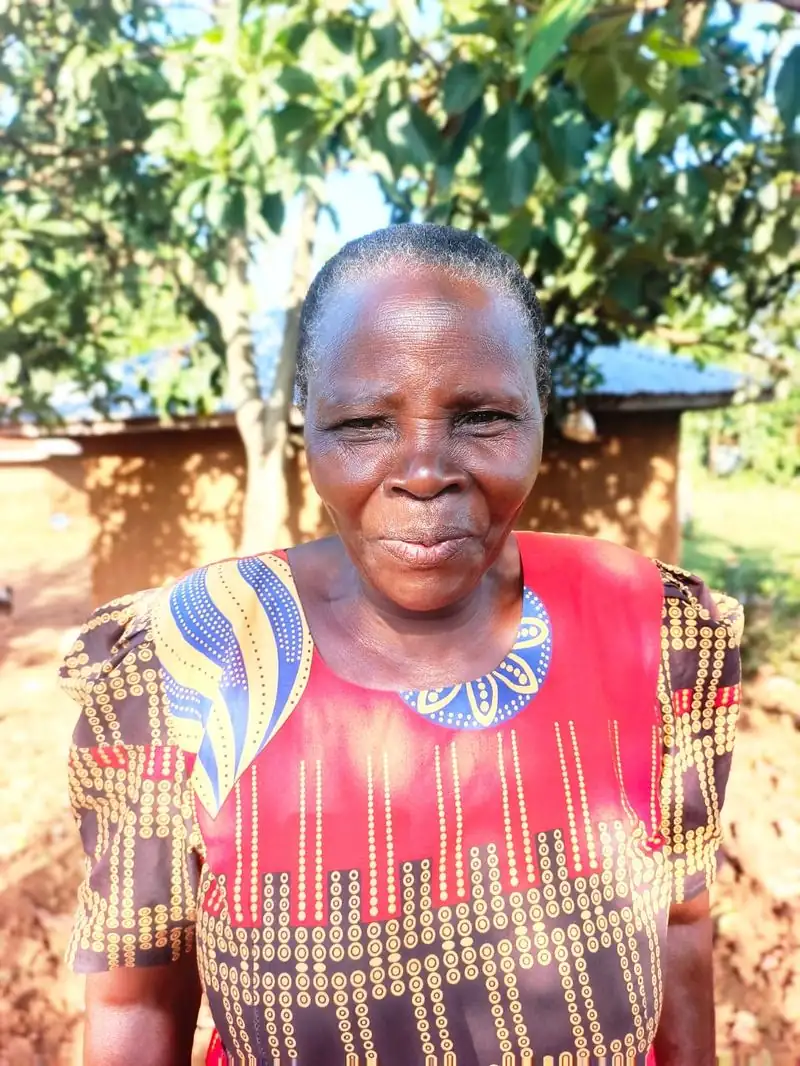
Farmers of MOTHERLAND CBO, Siaya County, 2025.

Liz Akinyi, farmer, Siaya County, Kenya
Liz Akinyi
Lead Farmer · Pap Gori
Age 40Household 10 people, 8 childrenExperience 15+ years farming
The challenge

"Farming is how I take care of my family. I have eight children, and this land is what keeps us going." Buying local bean seed at KSh 250/kg and mixed-farming one acre, Liz harvested only 30 kg of beans and 100 kg of maize, sold at KSh 75 and KSh 50 per kilogram. "The money I made was less than what I had spent to grow the crops. I was farming hard and still falling behind." She could not afford school fees for her children.

What changed

MOTHERLAND's training, certified Nyota seed on loan, and a dependable market at KSh 125/kg doubled her yield to 100–120 kg per acre per season. "I can now confidently pay school fees for my eight children without borrowing from anyone."

"Before MOTHERLAND, I was farming hard and still falling behind. Now I can pay school fees for my eight children without borrowing. I am not just surviving anymore. I am building something."

30 → 100–120kg beans/acre/season
75 → 125KSh/kg bean price
Florence Ochieng, farmer, Siaya County, Kenya
Florence Atieno Ochieng
Lead Farmer · widow, household of 5
Age 49Household Florence & 4 childrenExperience 30+ years farming
The challenge

As a widow, every decision and every cost falls on Florence alone. Certified seed cost up to KSh 800 per packet, available only more than 5 kilometres away in Siaya town: many seasons she simply could not afford it. "There were no dependable buyers and no certainty. I was working hard for very little, with no one to share that weight with."

What changed

MOTHERLAND provided seed on manageable repayment terms, training, and connected 80% of her harvest to a guaranteed buyer at KSh 125/kg, collected in bulk from the farm. Last season she harvested 270 kg of beans (three full bags), expanded from 0.75 to a full acre, and was made a Lead Farmer, now guiding other farmers in her community.

"I have no stress about inputs, and I have no stress about the market. MOTHERLAND has given me both. Now I focus on farming and on leading the farmers around me."

0.75 → 1acre under cultivation
270 kgbeans harvested last season
Willis Ochieng, farmer, Siaya County, Kenya
Willis Ochieng
Farmer · one of the youngest in the MOTHERLAND network
Age 29Income Farming, since joining MOTHERLAND
The challenge

"Every time I looked at it closely, the numbers did not work." Certified seed cost up to KSh 800 per kilogram, while the open market paid just KSh 75/kg for beans. "I had not failed at farming. I had looked at it clearly and decided it was not worth trying."

What changed

One training shifted everything: land preparation, full-season crop management, and farming as a business. MOTHERLAND's fair-priced inputs removed the cost barrier, and a guaranteed market was in place before he even planted.

"I had no interest in agriculture because the inputs were too expensive and the market was too low. One MOTHERLAND training changed all of that. Now I am farming, and I have a market waiting for my harvest."

Joseph Were, farmer, Siaya County, Kenya
Joseph Were
Soil Health Ambassador
Age 63Household 7 people, 6 childrenExperience 30 years farming
The challenge

Farming half an acre in mixed production, Joseph's best harvest was around 40–84 kg of beans. Certified seed sold at KSh 820 per 2 kg packet and market prices were as low as KSh 60/kg. "Market access was the wall I had been hitting for decades."

What changed

MOTHERLAND added two vermicompost structures to the one he already had, bringing him to three, enough to nourish his entire acre across all crops season after season. Combined with training and a guaranteed market, his bean yield grew to 150–200 kg on a full acre, guaranteeing at least KES 14,000 per season, with one child now in college.

"I farmed for 30 years battling the same problems: expensive inputs, low yields, and no market that treated me fairly. Since MOTHERLAND came, all three of those problems have been addressed."

84 → 150–200kg beans, half → full acre
1 → 3vermicompost structures
Voice from the field

Ian Owuor, Agronomist

31 years old · 7 years farming experience · 2 years with MOTHERLAND

"Effective agricultural extension is not achieved through training alone. Farmers need knowledge that is practical, repeated, accessible and supported at the right time. When field teams are organised around farmers' needs and supported with appropriate tools and resources, we can reach more farmers and provide better-quality technical support."
12
Section 12

Bean Enterprise: Income, Stock & Financial Stewardship

MOTHERLAND's long-term vision extends beyond implementing development projects. The organisation is intentionally building a financially sustainable agricultural enterprise capable of generating income to continually invest in farmers, expand programme reach, and reduce dependence on grant funding over time: positioning farmers as long-term business partners.

How physical stock moved through the enterprise

Stock position / movementQuantity (kg)Value / treatment
Stock carried forward780.0KES 101,400 at KES 130/kg
Long-rains stock received (seed-loan returns and purchases)4,366.0KES 567,580 at KES 130/kg
Short-rains stock received (seed-loan returns and purchases)3,124.5KES 406,185 at KES 130/kg
Total recorded stock available8,270.5KES 1,075,165 at KES 130/kg
Seed converted & issued to farmers1,500.0Social / revolving seed allocation; not a cash sale
Commercial stock outflows tracked3,658.0Balance-reducing commercial sales
Closing stock balance3,112.5Physical balance after recorded movements

8,270.5 kg available, less 1,500 kg converted to seed-loans and 3,658 kg of commercial sales, equals 3,112.5 kg closing stock. The stock figures only include beans received into storage, as seed-loan returns or purchases. The rest of the harvest stayed with farmers for household food security, around 20% by design: 983 kg of the 5,349 kg long-rains harvest and 472.5 kg of the 3,597 kg short-rains harvest.

Commercial activity & cash generation

Commercial indicator2025 recorded resultInterpretation
Commercial stock sold (balance-tracked)3,658 kgPhysical stock converted through recorded commercial sales
Recorded value of those transactionsKES 485,480Gross transaction value, not net profit
Separate seed sales to farmers16 kgRecorded separately from running stock balance
Value of separate seed salesKES 7,100Transaction value
Short-rains offtaker sale1,236 kgKES 160,680 at KES 130/kg
Working-capital facilityKES 300,000Financing, not revenue
Total loan repaymentKES 339,000100% settled
Finance costKES 39,000Difference between facility and repayment

MOTHERLAND converted part of its bean stock into commercial sales, used working capital to support aggregation, fully repaid the KES 300,000 facility together with KES 39,000 in financing cost, and retained 1,500 kg of beans for seed-loan distribution: linking commercial activity directly to continued farmer support.

2026 financial priorities

  • Increase internally generated working capital.
  • Reduce reliance on commercial borrowing and the associated KES 39,000 finance cost.
  • Strengthen institutional and private offtake agreements.
  • Improve level of stock sales.
  • Lock year-end physical inventory and accounting valuation.
  • Publish a reconciled income statement before claiming net profit.

Partnership stewardship

MOTHERLAND has received Chancemaker Foundation support over three years: EUR 50,000 in each of 2023 and 2024, and EUR 15,000 received in batches during 2025: and received USD 75,000 from Cisco for the AI-powered LIMA tool.

Expense category2025 (EUR)
FTE / staff-related costs16,182.00
Transport4,515.60
Young Earth Guardians / kids programme426.00
Community meetings / friendly visits426.00
Office rent & materials2,300.40
Tech services / office Wi-Fi426.00
Other running costs2,400.00
EPROD subscription & seed production3,276.00
Total documented 2025 expenditure29,952.00

Documented 2025 expenditure of EUR 29,952 exceeds the EUR 15,000 of Chancemaker Foundation funding received during 2025.

What the partner funding enabled

PartnerPrimary contribution to 2025 modelDonor-facing result
Chancemaker FoundationCore operational and agricultural programme supportMaintained staff, transport, community, technology, EPROD and seed-production capacity
CiscoDigital innovation grant of USD 75,000Supported development and implementation pathway for LIMA, including content, pilot and evaluation
Peachstone.AITechnical construction of LIMADigital tool development expertise
Learning from the Motherland gUGManagement, resource mobilisation and strategic guidanceOrganisational leadership and partnership support
13
Section 13

Challenges & Lessons Learned

What 2025 taught MOTHERLAND about delivering in a variable farming environment. Seasonal weather variation affected production and participation, while MOTHERLAND simultaneously managed seed recovery, market absorption, working capital and the development of stronger digital and measurement systems.

Challenge experiencedMOTHERLAND's responseLesson from 2025
Erratic rainfall and climatic variabilityClimate-smart and regenerative agriculture, seasonal planning and soil-health workClimate adaptation needs to be integrated across production, seed and extension
Seasonal differences in farmer participationPlanning around local climate, farmer preferences, land and available resourcesParticipation is seasonal and should be understood in context, not as a fixed annual cohort
Market absorption and price uncertaintyAggregation, buyer engagement and working capital supportProduction support is strongest when linked to market planning
Seed-loan recoveryRecovery monitoring, extension and the revolving seed modelRecovery performance needs continuous farmer-level follow-up
Longitudinal outcome measurementProgressive survey, production records and farmer testimonialsCombining evidence sources strengthens understanding of farmer change
Digital extensionDevelopment of LIMA with technical and funding partnersDigital tools can complement field extension and expand future reach
  • Integrated support matters: seed access has greater value when farmers also receive technical knowledge and market opportunities.
  • Local leadership remains an important delivery mechanism through lead farmers and Soil Health Ambassadors.
  • Climate variability must be treated as a core programme consideration: it influences both production and participation.

The year reinforced the role of commercial activity within MOTHERLAND's social enterprise model: agricultural stock can generate market income while a portion is retained within the revolving seed system. The quality of impact reporting depends on the quality of farmer-level evidence: linking participation, production, sales, practice adoption and follow-up will allow MOTHERLAND to demonstrate change with greater confidence.

These lessons are informing the 2026 programme cycle. MOTHERLAND is strengthening farmer-level longitudinal tracking so that seasonal participation and production can be understood alongside income, practice adoption, seed recovery and retention: using better connected evidence to improve programme decisions and demonstrate results.

14
Section 14

LIMA: Digital Agricultural Extension

An emerging digital platform to extend agricultural knowledge. In 2025, MOTHERLAND advanced the development of LIMA as a digital agricultural extension platform, complementing field-based advisory services with a digital channel through which farmers can access agricultural information and support.

MOTHERLAND farmer, Siaya County

2025 development milestones

Platform conceptProgressed as a digital agricultural advisory initiative
Technical developmentPeachstone.AI supported construction of the tool
Funding partnershipCisco supported the development pathway
Agricultural contentDevelopment of a digital advisory content pathway
Extension modelDesigned to complement field-based agricultural extension

Why LIMA matters

Traditional agricultural extension depends substantially on physical visits and the availability of extension personnel. Farmers may need information on planting, pests, crop management, fertiliser use or markets at times when a field officer is not immediately available: LIMA is being developed to extend the reach of technical support through a digital channel.

Planned farmer experience

  • Approved agricultural content: more consistent access to agricultural reference information.
  • Question answering: support for routine agricultural questions.
  • Market information: improved awareness of market opportunities.
  • Extension-team support: a complementary tool for responding to farmer needs.
  • WhatsApp-based access: a familiar and accessible communication channel.

The road ahead

LIMA's significance will increasingly be demonstrated through actual farmer and Local Impact Team use, quality of responses, and evidence that information received through the platform supports decisions and agricultural practice. As the platform moves into wider use, MOTHERLAND will build an evidence base around reach, interaction, response time, user experience and practical application.

15
Section 15

Partnership & Contribution to the SDGs

MOTHERLAND's 2025 work was supported by a network of funding, technical, regulatory, implementation and market partners, each contributing differently to combine agricultural delivery, digital innovation, seed quality, market access and organisational development.

PartnerContribution in 2025Role in the programme
Chancemaker FoundationMulti-year funding; EUR 15,000 received in 2025, following EUR 50,000 in each of 2023 and 2024Supported programme operations and agricultural delivery
CiscoFunding support for LIMA developmentEnabled the digital innovation pathway
Peachstone.AIConstruction and technical development of LIMAProvided digital advisory capability
Learning from the Motherland gUGManagement, resource mobilisation, partnerships and strategic guidanceConnected local implementation with funding and organisational support
KEPHISCertification and regulatory oversightSupported certified seed multiplication and compliance
KALRO / technical actorsAgricultural technical collaborationStrengthened technical quality and provision of seeds
RHEA Soil Health / community actorsSoil-health learning and peer leadershipStrengthened community capacity
Private and offtaker partnersMarket engagementSupported aggregation and commercial sales

Contribution to the Sustainable Development Goals

The 2025 evidence is presented as contribution to these goals, rather than as a claim that the organisation has independently achieved them.

SDG 1 · No Poverty

Agricultural enterprise and market-oriented production. 118 of 141 surveyed farmers report an increase in income.

SDG 2 · Zero Hunger

Bean production and household use. A total of 8,946 kg of beans produced from farmers.

SDG 5 · Gender Equality

Women's participation and leadership. 405 female participation records.

SDG 8 · Decent Work

Agricultural enterprise and capacity development. 10 seasonal workers on the 3-acre seed field, 3 MOTHERLAND agents, 2 Local Impact Team members.

SDG 13 · Climate Action

Climate-smart and soil-health practices. 84 of 141 surveyed reported climate-adaptation measures.

SDG 17 · Partnerships

Collaboration across donors, technical actors and markets. MOU signed between MOTHERLAND, RHEA, Peachstone.AI and Learning from the Motherland gUG.

Local implementation and organisational support. Learning from the Motherland gUG is the German nonprofit based in Hamburg that supports resource mobilisation, partnerships and strategic guidance for locally led initiatives. MOTHERLAND CBO is the Kenyan community-based implementation organisation working directly with farming communities in Siaya County. This distinction, and the distinction between funders, technical partners, market partners and implementation actors, provides transparency about how MOTHERLAND's 2025 programme was delivered.
16
Section 16

MEAL, Data Quality & Learning

MOTHERLAND's 2025 monitoring system brought together farmer registration, farm mapping, training attendance, production and aggregation records, inspections, financial and stock records, farmer surveys and recorded testimonials: each strongest when interpreted according to what it can actually demonstrate.

MOTHERLAND farmer with certified Nyota bean seed, Siaya County
Evidence sourceWhat it demonstratesHow it is interpreted
Registration and farm mappingParticipation, demographics and farm characteristicsAdministrative evidence
Training attendanceTraining delivered and farmer participation in sessionsParticipation evidence; attendance alone does not demonstrate adoption
Production and aggregationHarvest, acreage, seed recovery and sales/aggregationAdministrative production evidence
Progressive surveySelf-reported income, food access, practice and climate-related outcomesSample-based outcome evidence
Farmer testimonialsExperience, perceptions and reported changeQualitative evidence, cross-checked against records where they exist
Financial and stock recordsFunding, stock, transactions and financingFinancial/enterprise evidence; transaction value is distinct from profit

Learning from the evidence

The 2025 evidence demonstrates the value of combining administrative records with farmer voice: production and aggregation records provide measurable quantities, surveys provide a broader view of farmer-reported outcomes, and testimonials explain how farmers experience the changes associated with programme participation. MOTHERLAND is strengthening farmer-level tracking so participation can be followed across seasons and linked to production, sales, practice adoption, seed recovery and retention.

Data quality & accountability

A key principle of the 2025 reporting process is that published figures remain traceable to their source and are labelled according to their evidence status: preventing training attendance from being presented as evidence of adoption, or survey responses from being presented as independently verified outcomes. Income changes should be followed up in subsequent surveys and linked, where possible, to farmer-level administrative records.

17
Section 17

2026 Priorities

From 2025 evidence to a more measurable and scalable next phase. The 2026 agenda builds directly on the lessons and systems established in 2025, centred on farmer reach, certified seed, climate resilience, markets, digital extension, enterprise development and stronger measurement.

MOTHERLAND farmer, Siaya County
Strategic area
2026 direction
Implementation target
Alignment
Strategic areaFarmer reach & training
2026 directionExpand farmer reach while maintaining quality and stronger farmer-level tracking
Implementation target1,000+ farmers on LIMA; 500 to complete all 16 modules by Nov. 2026
AlignmentStrong
Strategic areaCertified seed
2026 directionIncrease multiplication and revolving seed access
Implementation target20-acre seed plot; 14,400 kg KEPHIS-certified seed by Nov. 2026
AlignmentStrong
Strategic areaDemonstration & learning
2026 directionStrengthen practical farmer learning and extension
Implementation targetNew funding from the W.P. Schmitz Stiftung and Biovision to support operations and production
AlignmentStrong
Strategic areaClimate resilience & soil health
2026 directionExpand regenerative agriculture, soil restoration, water conservation
Implementation targetCompost/vermicomposting for every participating household; soil testing by Oct. 2026
AlignmentStrong
Strategic areaDigital agriculture / LIMA
2026 directionMove LIMA from development toward testing and measured use
Implementation targetDigital training; beta test; 75% team use targeted by Oct. 2026
AlignmentStrong
Strategic areaMEAL
2026 directionBuild farmer-level longitudinal measurement
Implementation targetBaseline survey for 1,000 LIMA farmers; 1,000+ verified EProd records
AlignmentStrong
Strategic areaGender & youth inclusion
2026 directionMaintain inclusion as a measurable programme dimension
Implementation targetMinimum 60% women and youth across the 2026 farmer portfolio, tracked in EProd
AlignmentAligned
18
Section 18

Investment Opportunity

Supporting the next stage of locally led agricultural transformation. The case for investment is grounded in what MOTHERLAND has already built, not a claim that all intended impacts have been achieved: a connected model of farmer support, a revolving seed system, certified seed production, aggregation and market activity, community leadership, technical partnerships and digital innovation.

MOTHERLAND farmer, Siaya County

Investment rationaleWhat 2025 demonstratedWhat additional investment can unlock
Farmer servicesActive seasonal participation and 537 training attendance instancesMore consistent training, agronomy, follow-up and community extension
Seed systems3,376.5 kg seed recovered and certified seed enterprise establishedHigher local seed availability and stronger revolving seed capacity
Climate resilienceClimate-smart and regenerative practices introducedWider adoption, soil restoration, water management and seasonal preparedness
MarketsAggregation and structured purchasing activityMore institutional buyers, stronger agreements and improved market planning
Digital extensionLIMA platform development progressedTesting, deployment, quality assurance and measured user adoption
MEAL141 of 209 active long-rains farmers surveyedUnique IDs, baseline and follow-up systems and farmer-level outcome tracking
Enterprise sustainabilityWorking-capital facility fully repaidStronger internal working capital, financial systems and revenue diversification
MOTHERLAND farmer, Siaya County
An evidence-based investment proposition

This is not simply funding more activities. It is strengthening a connected system.

Farmer knowledge, quality seed, climate resilience, markets, digital extension and evidence reinforce one another. For institutional and corporate partners, this creates the opportunity to support a defined component while contributing to a wider, locally led agricultural model.

Partner with MOTHERLAND →
19
Section 19

Appendix: Sources, Notes & Acknowledgements

A transparent trail behind the 2025 impact report.

Source categoryUse in the report
Farmer registration recordsParticipation, demographics, geographic coverage
Training attendance recordsTraining delivery and attendance instances by topic/session
Production & aggregation recordsSeasonal harvest, quantities recovered/purchased, market activity
Farm inspection & agronomist recordsAgronomic observations and field-level verification
Progressive farmer survey, 2025Self-reported income, food access, practice and climate outcomes
Recorded farmer testimonialsQualitative evidence, selected stories translated from Kiswahili and Luo
Stock management recordsOpening stock, recovered beans, purchases, issues and sales
Financial recordsFunding receipts, expenditure, financing and accounting evidence
KEPHIS certification recordsCertified seed production and regulatory verification
Partner & project recordsPartner contributions, LIMA development and implementation plans

Acknowledgements

MOTHERLAND extends sincere appreciation to the farmers and community leaders whose participation, experience and feedback are at the centre of this report. We also acknowledge the staff, technical actors, regulatory institutions, market partners and development partners who contributed to implementation during 2025.

Special appreciation goes to Chancemaker Foundation for its multi-year partnership, Cisco for supporting the AI development pathway for LIMA, Peachstone.AI for constructing the LIMA tool, and Learning from the Motherland gUG for management, resource mobilisation, strategic guidance and partnership support.

Section 20

Conclusions

MOTHERLAND's 2025 impact story is one of strengthening the foundations for farmer knowledge, seed systems, climate resilience, markets, community leadership, digital innovation and evidence. The next phase is about using those foundations responsibly, reaching more farmers, measuring change better and building systems that can sustain locally led agricultural transformation.

NEWSLETTER

Stay close to Siaya.

Stories, numbers and honest updates from the field, straight to your inbox. Free via Substack, unsubscribe with one click.

SUBSTACK · BLOG.MOTHERLAND.EARTH →